
Author: Summer Publish Time: 2026-10-16 Origin: Site


A shirt that looks perfect on the hanger can look tired after a single season, and it is rarely the cotton's fault. Washing exposes decisions that were made long before the shirt reached a customer: how the yarn was relaxed, how the fabric was finished, what is inside the collar, and how the seams were constructed.
Here is what twenty washes actually reveal.
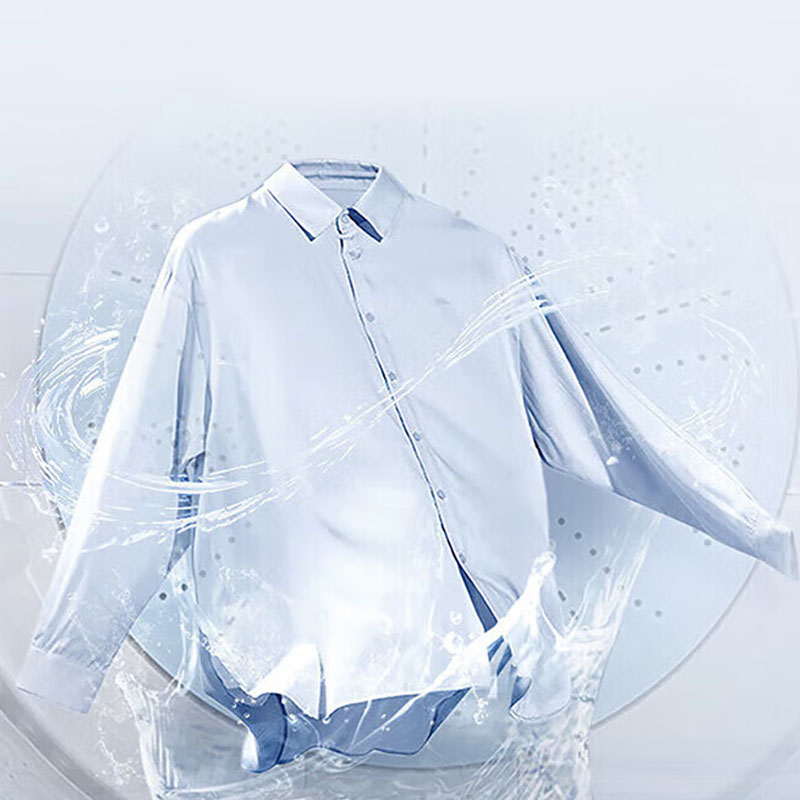
Washing exposes the decisions made long before the shirt was cut.
Cotton relaxes when it gets wet. If the fabric was not relaxed before cutting, the garment shrinks after the first wash — usually in length, sometimes unevenly between body and sleeves, which shows up as a hem that rides up and a shirt that no longer tucks properly.
This is the most expensive kind of problem, because it costs almost nothing to prevent at the mill and cannot be fixed after the goods are cut. So the question to ask is not "does this fabric shrink?" Every cotton fabric does. The question is: was the fabric relaxed before cutting, and was the shrinkage checked on the finished garment rather than on the swatch?
Reactive-dyed cotton holds colour considerably better than pigment-dyed or garment-washed finishes. Deep shades — black, navy, deep red — show fading sooner than middle tones, simply because there is more dye to lose. Printed cotton behaves differently again from printed polyester: the colour sits on the fibre rather than inside it, so print sharpness and bleeding are separate tests from colour fastness.
Ask for the fastness test on the actual fabric, not a photo of a swatch under studio light.
A collar that bubbles, ripples or separates after washing is almost never a cotton problem. It is an interfacing problem: which interfacing was used, and at what fusing temperature and pressure. A lightweight, low-quality fusible can look perfect in the sample and delaminate after ten washes.
This is a cheap question with an expensive answer. Ask what interfacing is used and whether it is specified as wash-resistant. Then check it on a washed sample, not a fresh one.
Seam puckering after washing usually means the sewing tension was set for how the garment looks on the table rather than for how the fabric behaves once it shrinks around the stitch line. It also appears when high-shrinkage fabric meets low-shrinkage thread. Neither shows up in a sample that has never been washed.
Fabric relaxed and shrinkage behaviour confirmed before cutting
Wash test performed on the finished garment, not the flat fabric
Interfacing specified and checked after washing
Seam construction and thread chosen for the fabric, not for the machine
Print or dye fastness confirmed on the production fabric
Fabric: composition, weight, construction, and "pre-relaxed" as a requirement
Shrinkage: state the maximum acceptable figure and how it will be measured
Collar: specify interfacing type and wash resistance
Wash care: define the test wash that the garment must survive
Sampling: approve a washed sample, not only a fresh one
None of these items adds meaningful cost to a production run. All of them are expensive to fix afterwards.
Before you cut: send us your specification or tech pack. We will tell you, in plain terms, where the wash risk is and what to change — the same read we give our own production before we commit fabric.